My Arsenal FC
A blog about all things Arsenal
Arsenal Analysis: Round 37 Player Analysis and Round 38 Team Selection
Following each round of the Premier League, each Arsenal player’s season-to-date performance is analysed and ranked against their internal competition.
In assessing the respective players on field production and their comparative internal rankings, each player is allocated into seven positional categories (with some players allocated to multiple positional categories due to their perceived versatility).
Those positional categories consist of:
- goalkeeper
- right fullback
- centre back
- left fullback
- centre midfield
- attacking midfield
- striker
Once categorised, each player’s output in defined key performance indicators (KPIs) for their respective positional category is then considered, using data sourced from Whoscored.com.
Different weightings are then assigned to the KPI data considered for each positional group based on the assumption that the cornerstones of Arsenal’s tactical approach is as follows:
- To provide a solid defensive platform, and allow for quick forward transitions and higher probability scoring opportunities.
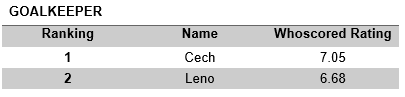
- Arsenal’s goalkeeper’s primary aims are to stop shots and claim crosses.
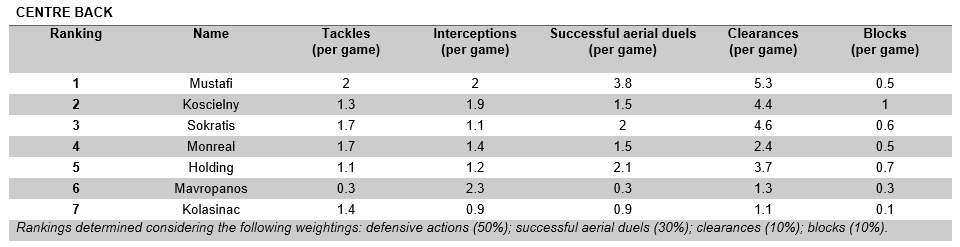
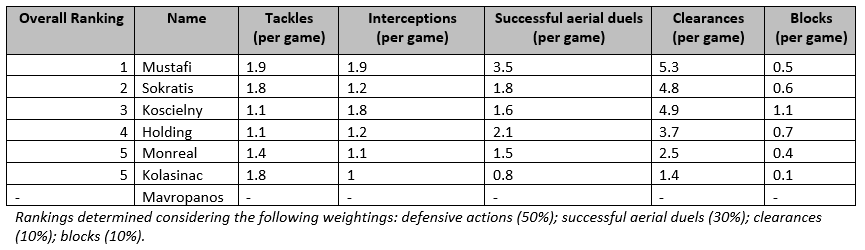
- Arsenal’s centre backs’ primary aims are to recover the ball from their opponent (tackles and interceptions), win aerial duels, clear the ball from danger and block shots.
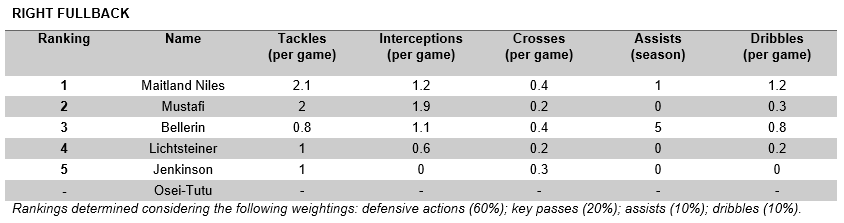
- Arsenal’s fullbacks’ primary aims are to recover the ball from their opponent (tackles and interceptions), cross the ball multiple times during a match (with the intent of providing assists), and contribute to the team’s offensive transitional play through multiple forward dribbles per match.
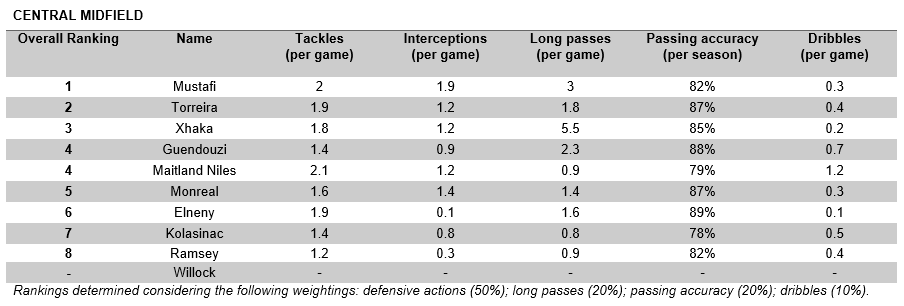
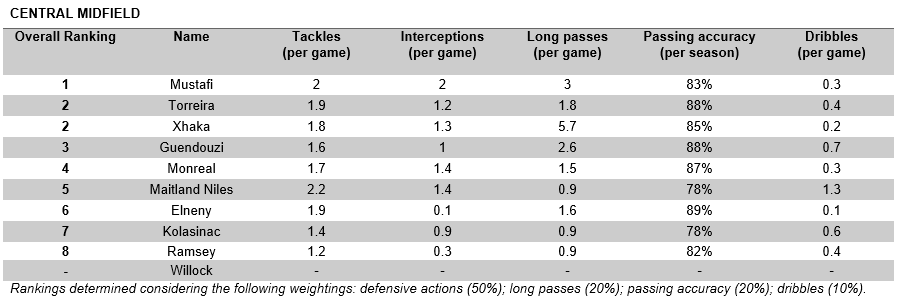
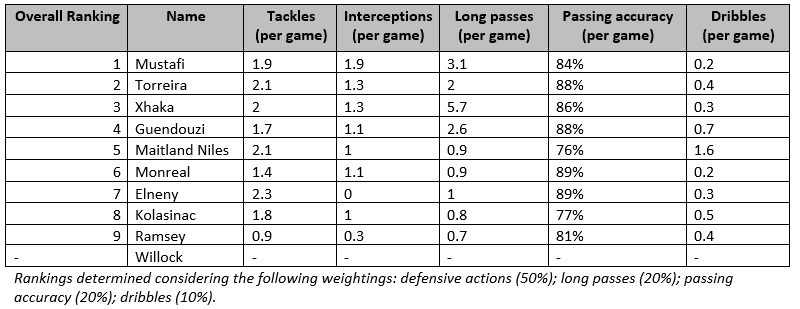
- Arsenal’s central midfielders’ primary aims are to recover the ball from their opponent (tackles and interceptions), and contribute to the team’s offensive transitional play through accurate passing, multiple long range passes, and multiple forward dribbles per match.
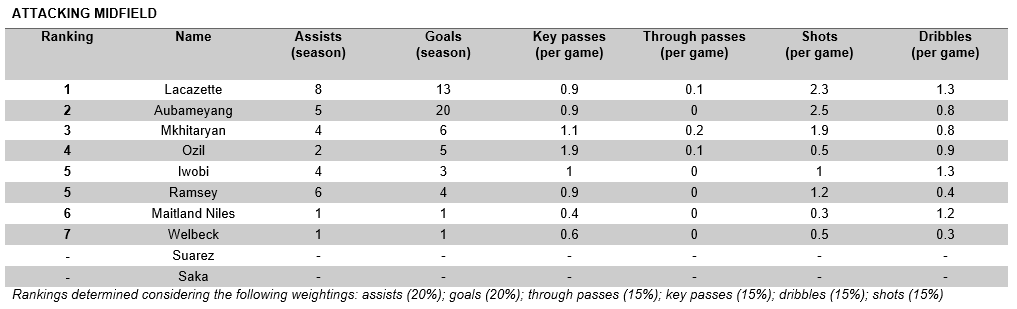
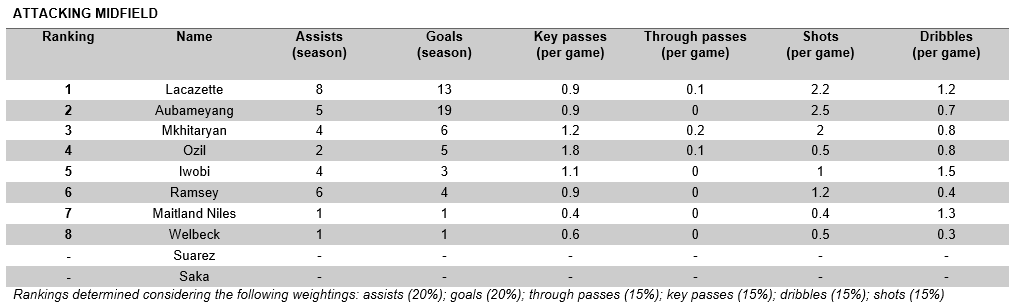
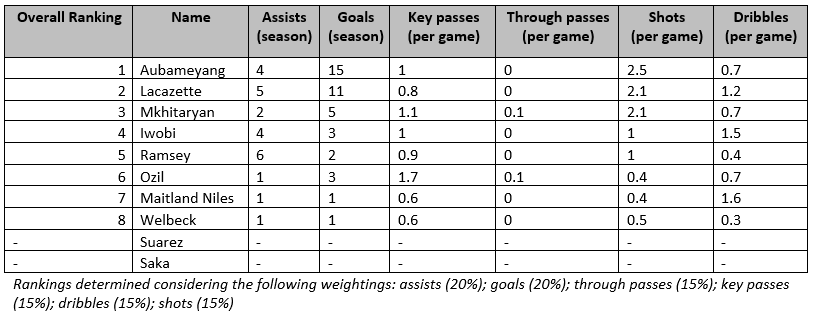
- Arsenal’s attacking midfielders’ primary aims are to provide assists, score goals, create goal scoring opportunities through multiple key passes, multiple through passes, and multiple forward dribbles per match.
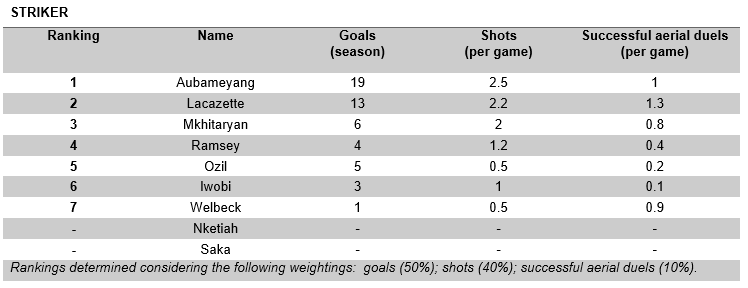
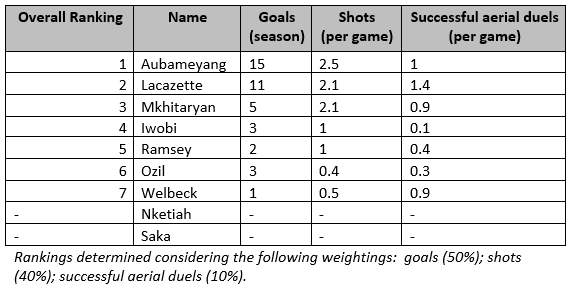
- Arsenal’s strikers’ primary aims are to score goals, and record multiple shots and successful aerial duels per match.
N.B. the ‘defensive block’ is comprised of Arsenal’s goalkeeper, right and left full back, and centre backs; the ‘midfield block’ is comprised of Arsenal’s centre midfielders; and the ‘attacking block’ is comprised of Arsenal’s attacking midfielders and strikers.
The findings of the aforementioned analysis, provide an invaluable insight as to:
- how each player ranks against their internal competition within their positional category; and
- which 11 players make up Arsenal’s most productive team.
Internal player rankings
Following Round 37 of the Premier League, the player rankings are as follows:



Formation and line-up
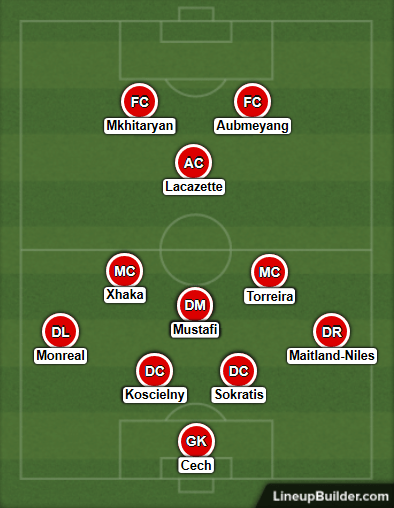
Based on the above analytical comparison, Arsenal’s aforementioned tactical basis, and with Bellerin, Holding, Ramsey, Suarez and Welbeck unavailable through injury, the 11 players which comprise Arsenal’s most productive starting 11, for their round 38 clash versus Burnley, would appear to be as follows:
Freddie08
Arsenal Analysis: Round 36 Player Analysis and Round 37 Team Selection
Following each round of the Premier League, each Arsenal player’s season-to-date performance is analysed and ranked against their internal competition.
In assessing the respective players on field production and their comparative internal rankings, each player is allocated into seven positional categories (with some players allocated to multiple positional categories due to their perceived versatility).
Those positional categories consist of:
- goalkeeper
- right fullback
- centre back
- left fullback
- centre midfield
- attacking midfield
- striker
Once categorised, each player’s output in defined key performance indicators (KPIs) for their respective positional category is then considered, using data sourced from Whoscored.com.
Different weightings are then assigned to the KPI data considered for each positional group based on the assumption that the cornerstones of Arsenal’s tactical approach is as follows:
- To provide a solid defensive platform, and allow for quick forward transitions and higher probability scoring opportunities.
- Arsenal’s goalkeeper’s primary aims are to stop shots and claim crosses.
- Arsenal’s centre backs’ primary aims are to recover the ball from their opponent (tackles and interceptions), win aerial duels, clear the ball from danger and block shots.
- Arsenal’s fullbacks’ primary aims are to recover the ball from their opponent (tackles and interceptions), cross the ball multiple times during a match (with the intent of providing assists), and contribute to the team’s offensive transitional play through multiple forward dribbles per match.
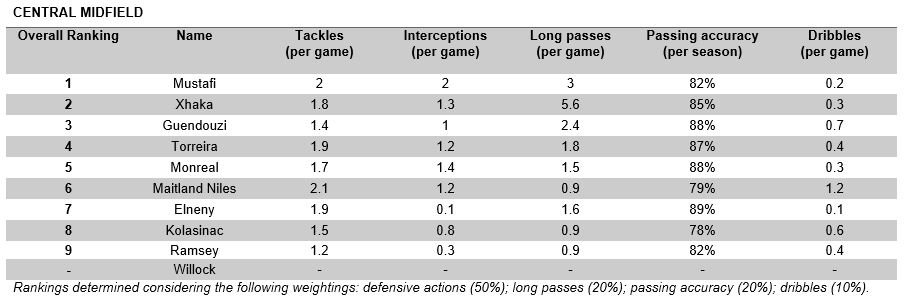
- Arsenal’s central midfielders’ primary aims are to recover the ball from their opponent (tackles and interceptions), and contribute to the team’s offensive transitional play through accurate passing, multiple long range passes, and multiple forward dribbles per match.
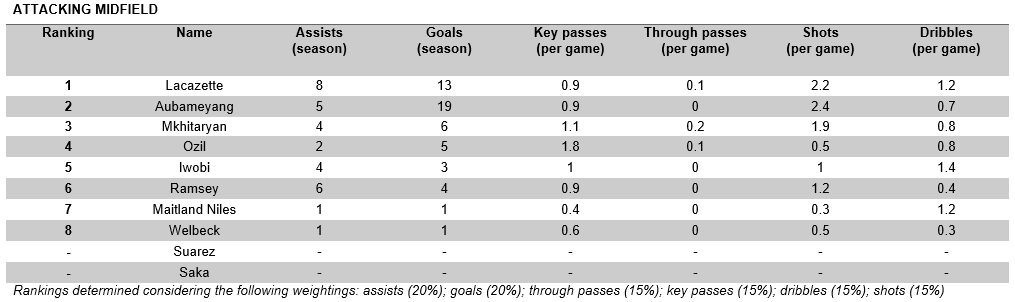
- Arsenal’s attacking midfielders’ primary aims are to provide assists, score goals, create goal scoring opportunities through multiple key passes, multiple through passes, and multiple forward dribbles per match.
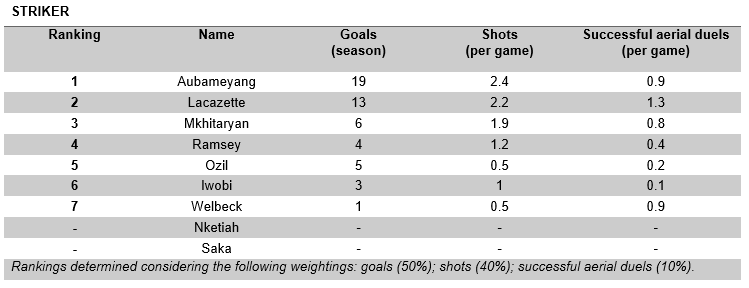
- Arsenal’s strikers’ primary aims are to score goals, and record multiple shots and successful aerial duels per match.
N.B. the ‘defensive block’ is comprised of Arsenal’s goalkeeper, right and left full back, and centre backs; the ‘midfield block’ is comprised of Arsenal’s centre midfielders; and the ‘attacking block’ is comprised of Arsenal’s attacking midfielders and strikers.
The findings of the aforementioned analysis, provide an invaluable insight as to:
- how each player ranks against their internal competition within their positional category; and
- which 11 players make up Arsenal’s most productive team.
Internal player rankings
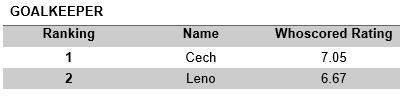
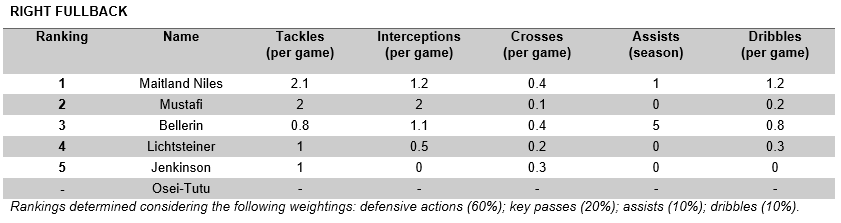
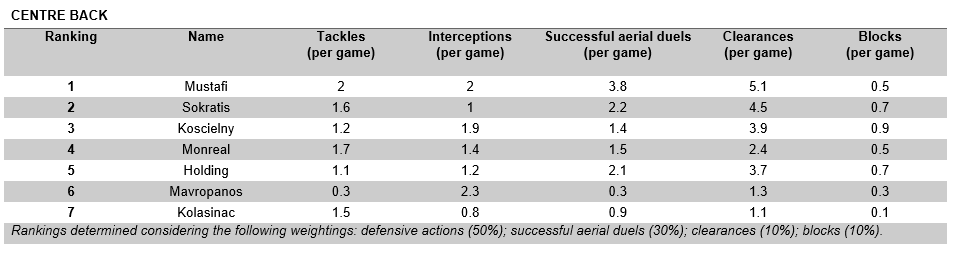
Following Round 36 of the Premier League, the player rankings are as follows:

Formation and line-up
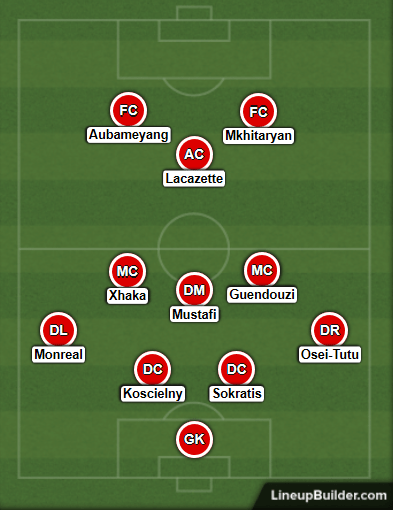
Based on the above analytical comparison, Arsenal’s aforementioned tactical basis, and with Bellerin, Holding, Ramsey, Suarez and Welbeck unavailable through injury, the 11 players which comprise Arsenal’s most productive starting 11, for their round 37 clash versus Brighton, would appear to be as follows:
Freddie08
Arsenal Analysis: Round 35 Player Analysis and Round 36 Team Selection
Following each round of the Premier League, each Arsenal player’s season-to-date performance is analysed and ranked against their internal competition.
In assessing the respective players on field production and their comparative internal rankings, each player is allocated into seven positional categories (with some players allocated to multiple positional categories due to their perceived versatility).
Those positional categories consist of:
- goalkeeper
- right fullback
- centre back
- left fullback
- centre midfield
- attacking midfield
- striker
Once categorised, each player’s output in defined key performance indicators (KPIs) for their respective positional category is then considered, using data sourced from Whoscored.com.
Different weightings are then assigned to the KPI data considered for each positional group based on the assumption that the cornerstones of Arsenal’s tactical approach is as follows:
- To provide a solid defensive platform, and allow for quick forward transitions and higher probability scoring opportunities.
- Arsenal’s goalkeeper’s primary aims are to stop shots and claim crosses.
- Arsenal’s centre backs’ primary aims are to recover the ball from their opponent (tackles and interceptions), win aerial duels, clear the ball from danger and block shots.
- Arsenal’s fullbacks’ primary aims are to recover the ball from their opponent (tackles and interceptions), cross the ball multiple times during a match (with the intent of providing assists), and contribute to the team’s offensive transitional play through multiple forward dribbles per match.
- Arsenal’s central midfielders’ primary aims are to recover the ball from their opponent (tackles and interceptions), and contribute to the team’s offensive transitional play through accurate passing, multiple long range passes, and multiple forward dribbles per match.
- Arsenal’s attacking midfielders’ primary aims are to provide assists, score goals, create goal scoring opportunities through multiple key passes, multiple through passes, and multiple forward dribbles per match.
- Arsenal’s strikers’ primary aims are to score goals, and record multiple shots and successful aerial duels per match.
N.B. the ‘defensive block’ is comprised of Arsenal’s goalkeeper, right and left full back, and centre backs; the ‘midfield block’ is comprised of Arsenal’s centre midfielders; and the ‘attacking block’ is comprised of Arsenal’s attacking midfielders and strikers.
The findings of the aforementioned analysis, provide an invaluable insight as to:
- how each player ranks against their internal competition within their positional category; and
- which 11 players make up Arsenal’s most productive team.
Internal player rankings
Following Round 35 of the Premier League, the player rankings are as follows:
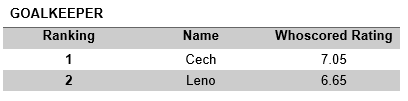
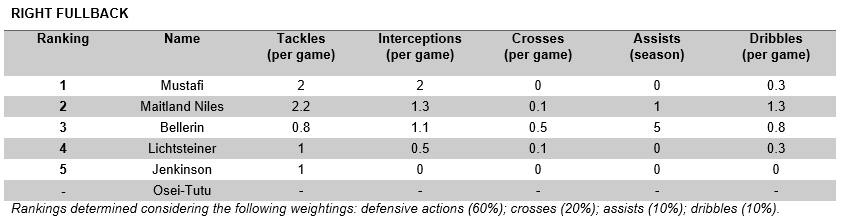
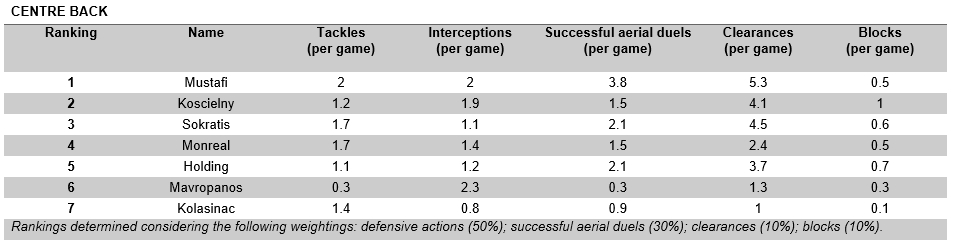

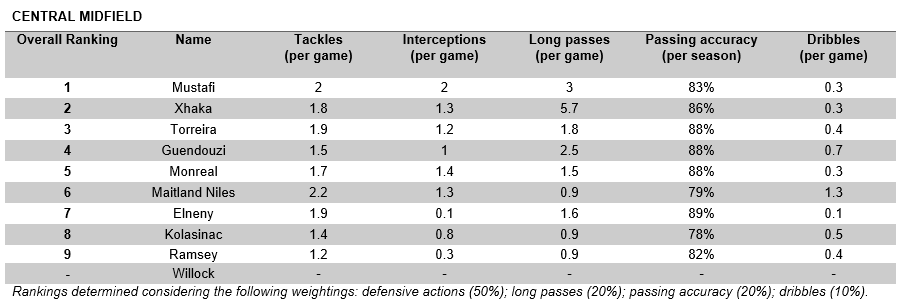
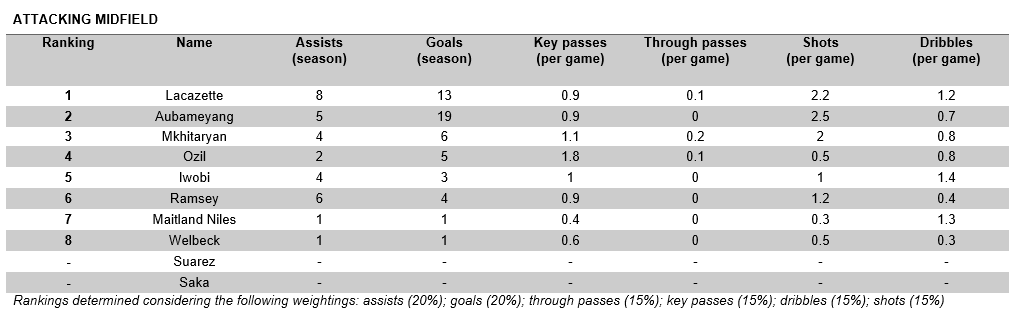
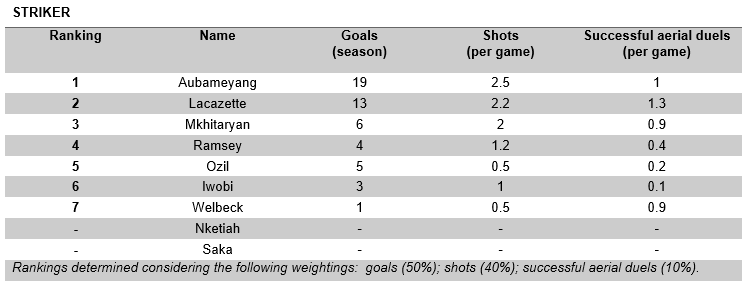
Formation and line-up
Based on the above analytical comparison, Arsenal’s aforementioned tactical basis, and with Bellerin, Holding, Ramsey, Suarez and Welbeck unavailable through injury, the 11 players which comprise Arsenal’s most productive starting 11, for their round 36 clash versus Leicester City, would appear to be as follows:

Freddie08
Arsenal Analysis: Round 34 Player Analysis and Round 35 Team Selection
Following each round of the Premier League, each Arsenal player’s season-to-date performance is analysed and ranked against their internal competition.
In assessing the respective players on field production and their comparative internal rankings, each player is allocated into seven positional categories (with some players allocated to multiple positional categories due to their perceived versatility).
Those positional categories consist of:
- goalkeeper
- right fullback
- centre back
- left fullback
- centre midfield
- attacking midfield
- striker
Once categorised, each player’s output in defined key performance indicators (KPIs) for their respective positional category is then considered, using data sourced from Whoscored.com.
Different weightings are then assigned to the KPI data considered for each positional group based on the assumption that the cornerstones of Arsenal’s tactical approach is as follows:
- To provide a solid defensive platform, and allow for quick forward transitions and higher probability scoring opportunities.
- Arsenal’s goalkeeper’s primary aims are to stop shots and claim crosses.
- Arsenal’s centre backs’ primary aims are to recover the ball from their opponent (tackles and interceptions), win aerial duels, clear the ball from danger and block shots.
- Arsenal’s fullbacks’ primary aims are to recover the ball from their opponent (tackles and interceptions), cross the ball multiple times during a match (with the intent of providing assists), and contribute to the team’s offensive transitional play through multiple forward dribbles per match.
- Arsenal’s central midfielders’ primary aims are to recover the ball from their opponent (tackles and interceptions), and contribute to the team’s offensive transitional play through accurate passing, multiple long range passes, and multiple forward dribbles per match.
- Arsenal’s attacking midfielders’ primary aims are to provide assists, score goals, create goal scoring opportunities through multiple key passes, multiple through passes, and multiple forward dribbles per match.
- Arsenal’s strikers’ primary aims are to score goals, and record multiple shots and successful aerial duels per match.
N.B. the ‘defensive block’ is comprised of Arsenal’s goalkeeper, right and left full back, and centre backs; the ‘midfield block’ is comprised of Arsenal’s centre midfielders; and the ‘attacking block’ is comprised of Arsenal’s attacking midfielders and strikers.
The findings of the aforementioned analysis, provide an invaluable insight as to:
- how each player ranks against their internal competition within their positional category; and
- which 11 players make up Arsenal’s most productive team.
Internal player rankings
Following Round 34 of the Premier League, the player rankings are as follows:
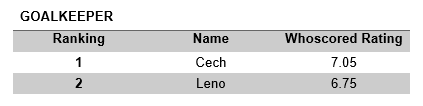
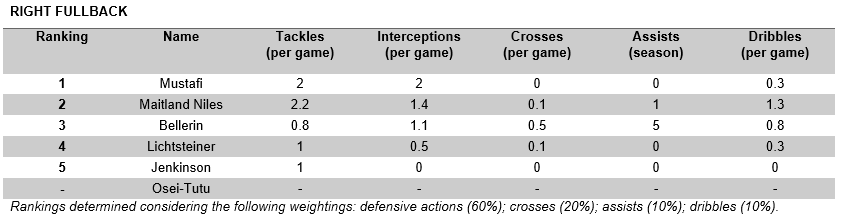

Formation and line-up
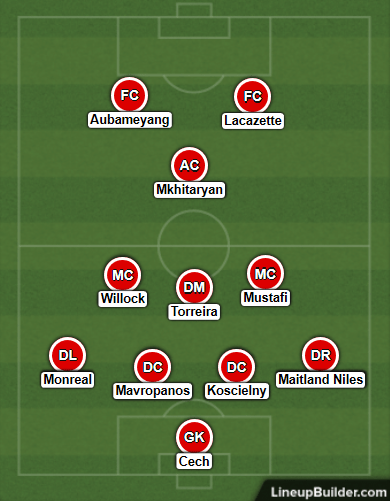
Based on the above analytical comparison, Arsenal’s aforementioned tactical basis, and with Sokratis suspended, and Bellerin, Holding, Xhaka, Ramsey, Suarez and Welbeck unavailable through injury, the 11 players which comprise Arsenal’s most productive starting 11, for their round 35 clash versus Wolverhampton Wolves, would appear to be as follows:
Freddie08
Arsenal Analysis: Round 33 Player Analysis and Round 34 Team Selection
Following each round of the Premier League, each Arsenal player’s season-to-date performance is analysed and ranked against their internal competition.
In assessing the respective players on field production and their comparative internal rankings, each player is allocated into seven positional categories (with some players allocated to multiple positional categories due to their perceived versatility).
Those positional categories consist of:
- goalkeeper
- right fullback
- centre back
- left fullback
- centre midfield
- attacking midfield
- striker
Once categorised, each player’s output in defined key performance indicators (KPIs) for their respective positional category is then considered, using data sourced from Whoscored.com.
Different weightings are then assigned to the KPI data considered for each positional group based on the assumption that the cornerstones of Arsenal’s tactical approach is as follows:
- To provide a solid defensive platform, and allow for quick forward transitions and higher probability scoring opportunities.
- Arsenal’s goalkeeper’s primary aims are to stop shots and claim crosses.
- Arsenal’s centre backs’ primary aims are to recover the ball from their opponent (tackles and interceptions), win aerial duels, clear the ball from danger and block shots.
- Arsenal’s fullbacks’ primary aims are to recover the ball from their opponent (tackles and interceptions), cross the ball multiple times during a match (with the intent of providing assists), and contribute to the team’s offensive transitional play through multiple forward dribbles per match.
- Arsenal’s central midfielders’ primary aims are to recover the ball from their opponent (tackles and interceptions), and contribute to the team’s offensive transitional play through accurate passing, multiple long range passes, and multiple forward dribbles per match.
- Arsenal’s attacking midfielders’ primary aims are to provide assists, score goals, create goal scoring opportunities through multiple key passes, multiple through passes, and multiple forward dribbles per match.
- Arsenal’s strikers’ primary aims are to score goals, and record multiple shots and successful aerial duels per match.
N.B. the ‘defensive block’ is comprised of Arsenal’s goalkeeper, right and left full back, and centre backs; the ‘midfield block’ is comprised of Arsenal’s centre midfielders; and the ‘attacking block’ is comprised of Arsenal’s attacking midfielders and strikers.
The findings of the aforementioned analysis, provide an invaluable insight as to:
- how each player ranks against their internal competition within their positional category; and
- which 11 players make up Arsenal’s most productive team.
Internal player rankings
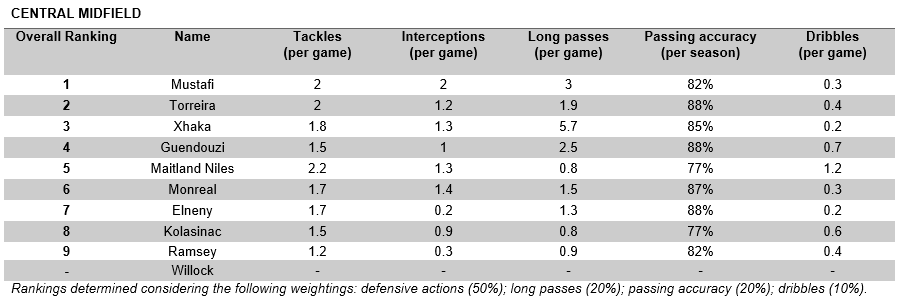
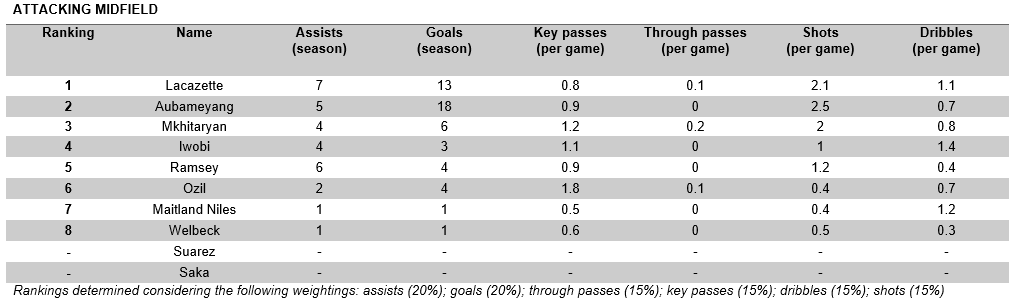
Following Round 33 of the Premier League, the player rankings are as follows:




Formation and line-up
Based on the above analytical comparison, Arsenal’s aforementioned tactical basis, and with Sokratis suspended, and Bellerin, Holding, Xhaka, Ramsey and Welbeck unavailable through injury, the 11 players which comprise Arsenal’s most productive starting 11, for their round 34 clash versus Crystal Palace, would appear to be as follows:

Freddie08
Arsenal Analysis: Round 32 Player Analysis and Round 33 Team Selection
Following each round of the Premier League, each Arsenal player’s season-to-date performance is analysed and ranked against their internal competition.
In assessing the respective players on field production and their comparative internal rankings, each player is allocated into seven positional categories (with some players allocated to multiple positional categories due to their perceived versatility).
Those positional categories consist of:
- goalkeeper
- right fullback
- centre back
- left fullback
- centre midfield
- attacking midfield
- striker
Once categorised, each player’s output in defined key performance indicators (KPIs) for their respective positional category is then considered, using data sourced from Whoscored.com.
Different weightings are then assigned to the KPI data considered for each positional group based on the assumption that the cornerstones of Arsenal’s tactical approach is as follows:
- To provide a solid defensive platform, and allow for quick forward transitions and higher probability scoring opportunities.
- Arsenal’s goalkeeper’s primary aims are to stop shots and claim crosses.
- Arsenal’s centre backs’ primary aims are to recover the ball from their opponent (tackles and interceptions), win aerial duels, clear the ball from danger and block shots.
- Arsenal’s fullbacks’ primary aims are to recover the ball from their opponent (tackles and interceptions), cross the ball multiple times during a match (with the intent of providing assists), and contribute to the team’s offensive transitional play through multiple forward dribbles per match.
- Arsenal’s central midfielders’ primary aims are to recover the ball from their opponent (tackles and interceptions), and contribute to the team’s offensive transitional play through accurate passing, multiple long range passes, and multiple forward dribbles per match.
- Arsenal’s attacking midfielders’ primary aims are to provide assists, score goals, create goal scoring opportunities through multiple key passes, multiple through passes, and multiple forward dribbles per match.
- Arsenal’s strikers’ primary aims are to score goals, and record multiple shots and successful aerial duels per match.
N.B. the ‘defensive block’ is comprised of Arsenal’s goalkeeper, right and left full back, and centre backs; the ‘midfield block’ is comprised of Arsenal’s centre midfielders; and the ‘attacking block’ is comprised of Arsenal’s attacking midfielders and strikers.
The findings of the aforementioned analysis, provide an invaluable insight as to:
- how each player ranks against their internal competition within their positional category; and
- which 11 players make up Arsenal’s most productive team.
Internal player rankings
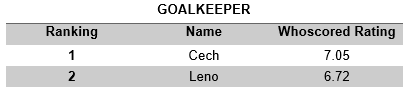
Following Round 32 of the Premier League, the player rankings are as follows:
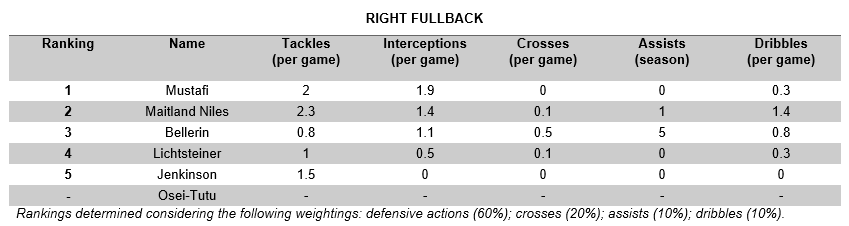
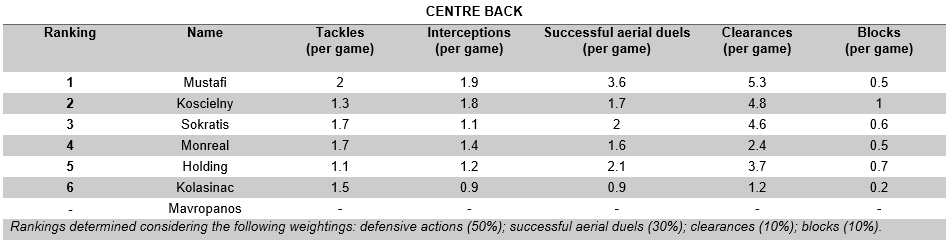

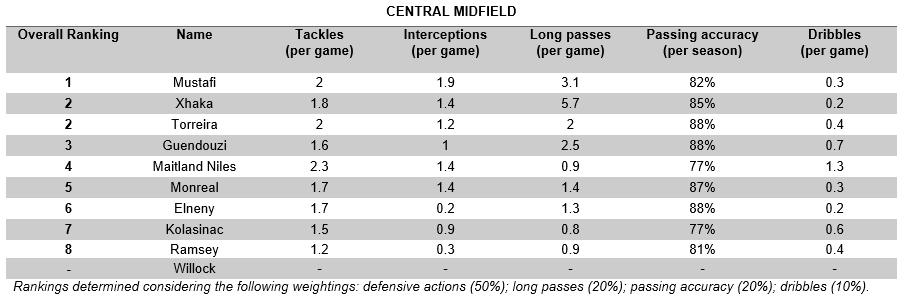
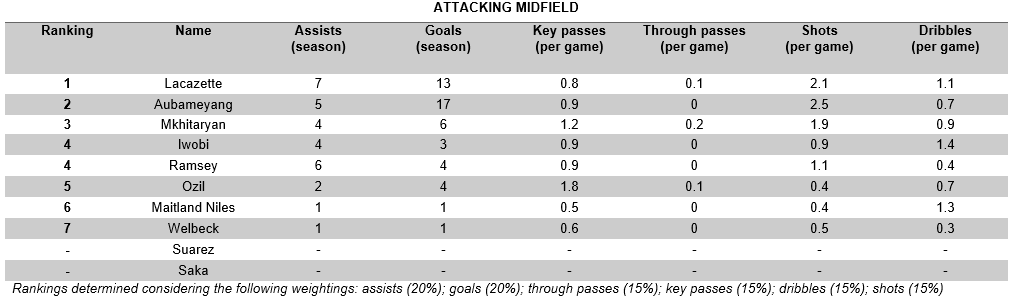
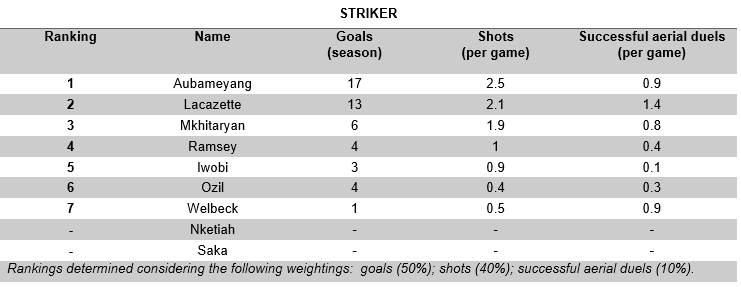
Formation and line-up
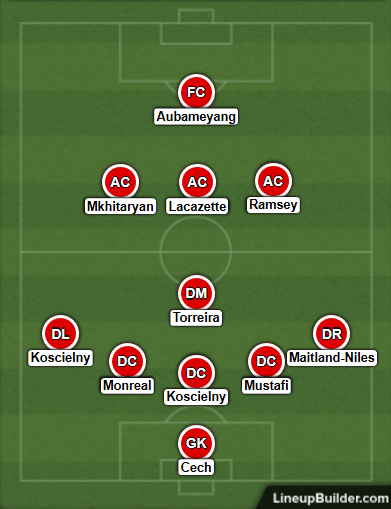
Based on the above analytical comparison, Arsenal’s aforementioned tactical basis, and with Sokratis suspended, and Bellerin, Holding, Xhaka and Welbeck unavailable through injury, the 11 players which comprise Arsenal’s most productive starting 11, for their round 33 clash versus Watford, would appear to be as follows:
Freddie08
Arsenal Analysis: Round 31 player analysis and Round 32 team selection
Following each round of the Premier League, each Arsenal player’s season-to-date performance is analysed and ranked against their internal competition.
In assessing the respective players on field production and their comparative internal rankings, each player is allocated into seven positional categories.
Those positional categories consist of:
- goalkeeper
- right fullback
- centre back
- left fullback
- centre midfield
- attacking midfield
- striker
Once categorised, each player’s output in defined key performance indicators (KPIs) for their respective positional category is then considered, using data sourced from Whoscored.com.
Different weightings are then assigned to the KPI data considered for each positional group based on the assumption that the cornerstones of Arsenal’s tactical approach is as follows:
- To provide a solid defensive platform, and allow for quick forward transitions and higher probability scoring opportunities, by creating generous spacing between their attacking block and midfield and defensive blocks.
- Arsenal’s goalkeeper’s primary aims are to stop shots and claim crosses.
- Arsenal’s centre backs’ primary aims are to recover the ball from their opponent (tackles and interceptions), win aerial duels, clear the ball from danger and block shots.
- Arsenal’s fullbacks’ primary aims are to recover the ball from their opponent (tackles and interceptions), cross the ball multiple times during a match (with the intent of providing assists), and contribute to the team’s offensive transitional play through multiple forward dribbles per match.
- Arsenal’s central midfielders’ primary aims are to recover the ball from their opponent (tackles and interceptions), and contribute to the team’s offensive transitional play through accurate passing, multiple long range passes, and multiple forward dribbles per match.
- Arsenal’s attacking midfielders’ primary aims are to provide assists, score goals, create goal scoring opportunities through multiple key passes, multiple through passes, and multiple forward dribbles per match.
- Arsenal’s strikers’ primary aims are to score goals, and record multiple shots and successful aerial duels per match.
N.B. the ‘defensive block’ is comprised of Arsenal’s goalkeeper, right and left full back, and centre backs; the ‘midfield block’ is comprised of Arsenal’s centre midfielders; and the ‘attacking block’ is comprised of Arsenal’s attacking midfielders and strikers.
The findings of the aforementioned analysis, provide an invaluable insight as to:
- how each player ranks against their internal competition within their positional category; and
- which 11 players make up Arsenal’s most productive team.
Internal player rankings
Following Round 31 of the Premier League, the player rankings are as follows:
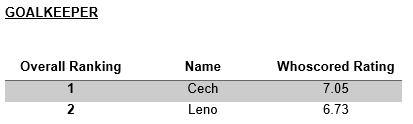
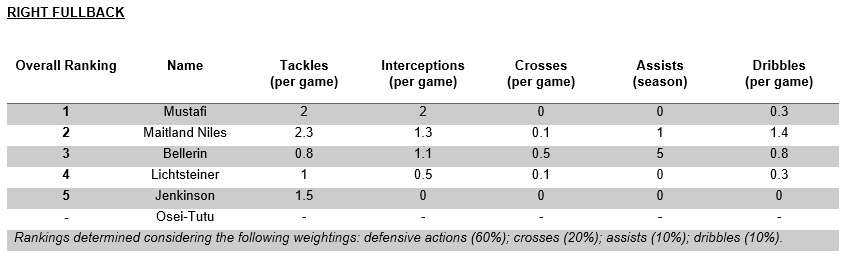
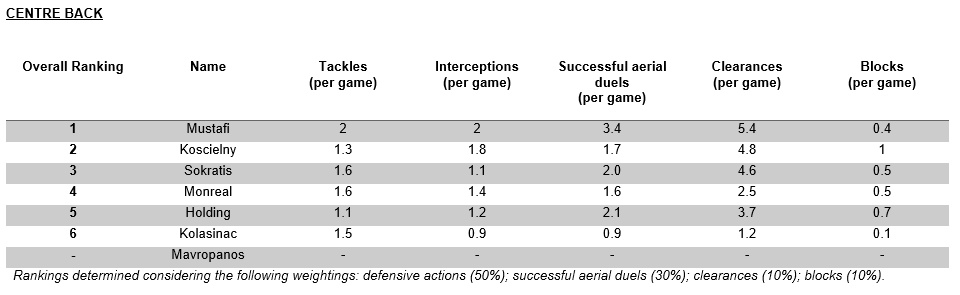
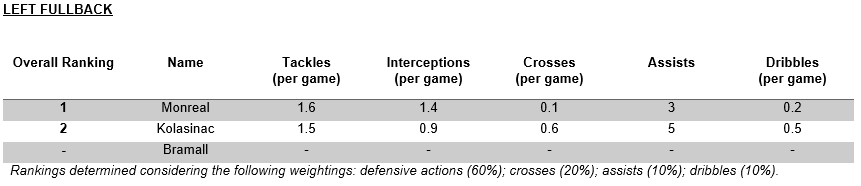

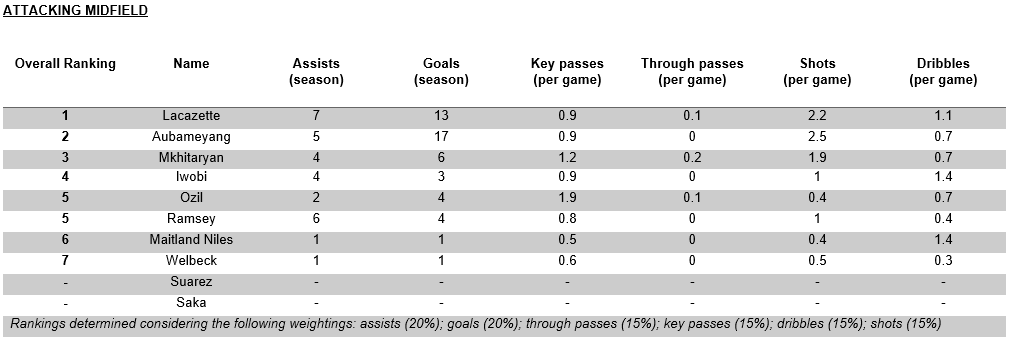
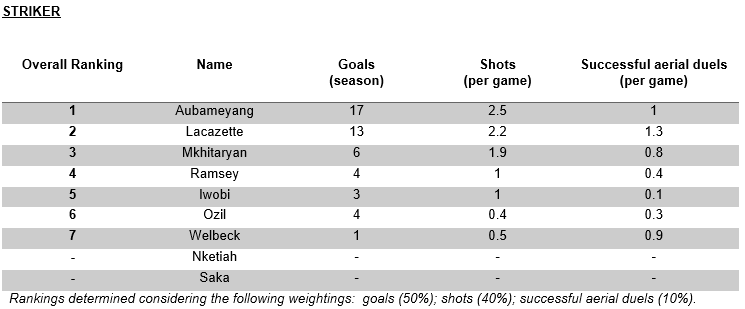
Formation and line-up
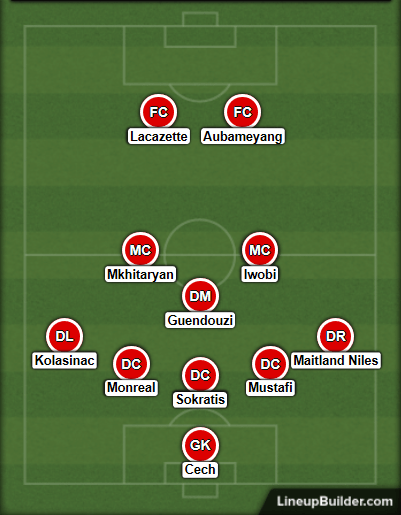
Based on the above analytical comparison, Arsenal’s aforementioned tactical basis, and with Bellerin, Koscielny, Holding, Xhaka, Ramsey and Welbeck unavailable through injury, and Torreira suspended, the 11 players which comprise Arsenal’s most productive starting 11, for their round 32 clash versus Everton, would appear to be as follows:
Freddie08
Arsenal Analysis: Round 30 player analysis and Round 31 team selection
Following each round of the Premier League, each Arsenal player’s season-to-date performance is analysed and ranked against their internal competition.
In assessing the respective players on field production and their comparative internal rankings, each player is allocated into seven positional categories.
Those positional categories consist of:
- goalkeeper
- right fullback
- centre back
- left fullback
- centre midfield
- attacking midfield
- striker
Once categorised, each player’s output in defined key performance indicators (KPIs) for their respective positional category is then considered, using data sourced from Whoscored.com.
Different weightings are then assigned to the KPI data considered for each positional group based on the assumption that the cornerstones of Arsenal’s tactical approach is as follows:
- To provide a solid defensive platform, and allow for quick forward transitions and higher probability scoring opportunities, by creating generous spacing between their attacking block and midfield and defensive blocks.
- Arsenal’s goalkeeper’s primary aims are to stop shots and claim crosses.
- Arsenal’s centre backs’ primary aims are to recover the ball from their opponent (tackles and interceptions), win aerial duels, clear the ball from danger and block shots.
- Arsenal’s fullbacks’ primary aims are to recover the ball from their opponent (tackles and interceptions), cross the ball multiple times during a match (with the intent of providing assists), and contribute to the team’s offensive transitional play through multiple forward dribbles per match.
- Arsenal’s central midfielders’ primary aims are to recover the ball from their opponent (tackles and interceptions), and contribute to the team’s offensive transitional play through accurate passing, multiple long range passes, and multiple forward dribbles per match.
- Arsenal’s attacking midfielders’ primary aims are to provide assists, score goals, create goal scoring opportunities through multiple key passes, multiple through passes, and multiple forward dribbles per match.
- Arsenal’s strikers’ primary aims are to score goals, and record multiple shots and successful aerial duels per match.
N.B. the ‘defensive block’ is comprised of Arsenal’s goalkeeper, right and left full back, and centre backs; the ‘midfield block’ is comprised of Arsenal’s centre midfielders; and the ‘attacking block’ is comprised of Arsenal’s attacking midfielders and strikers.
The findings of the aforementioned analysis, provide an invaluable insight as to:
- how each player ranks against their internal competition within their positional category; and
- which 11 players make up Arsenal’s most productive team.
Internal player rankings
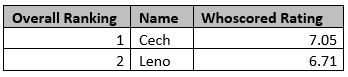
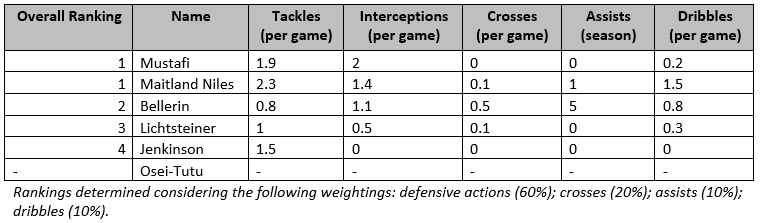
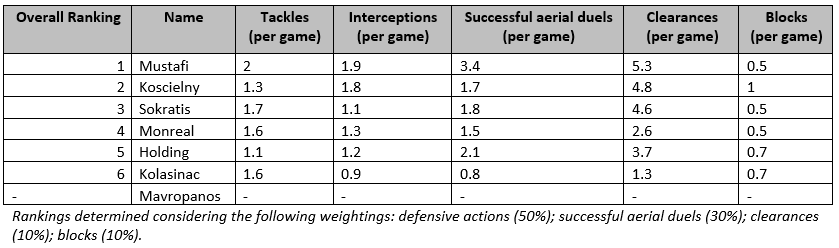
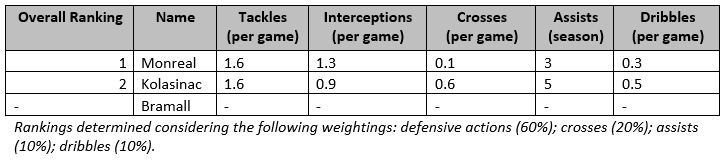
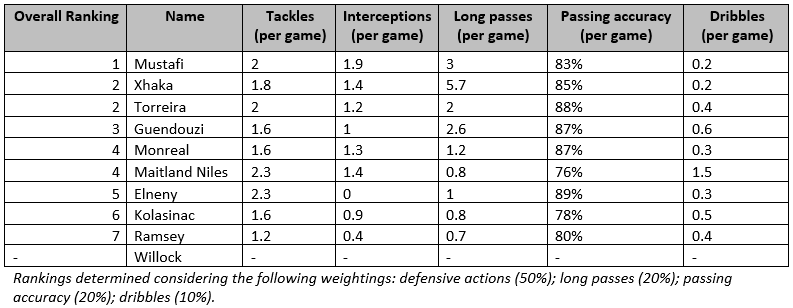
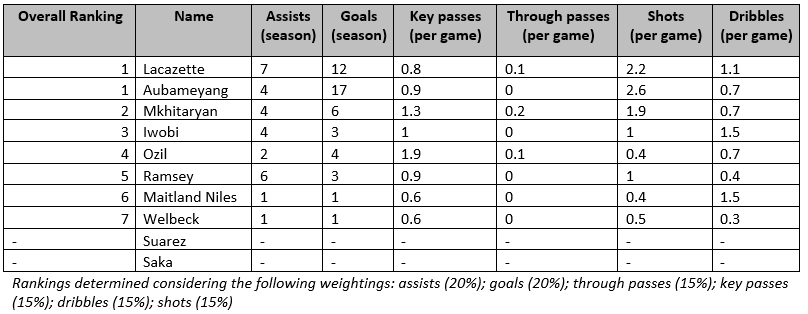
Following Round 30 of the Premier League, the player rankings are as follows:
Goalkeeper:
Right fullback:
Centre back:
Left fullback:
Centre midfield:
Attacking midfield:
Striker:

Formation and line-up
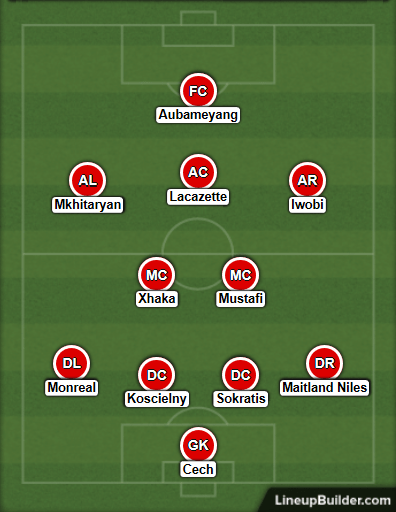
Based on the above analytical comparison, Arsenal’s aforementioned tactical basis, and with Bellerin, Holding, and Welbeck unavailable through injury, and Torreira suspended, the 11 players which comprise Arsenal’s most productive starting 11, for their round 31 clash versus Newcastle, would appear to be as follows:
Freddie08
Arsenal Analysis: Round 29 player analysis and Round 30 team selection
Following each round of the Premier League, each Arsenal player’s season-to-date performance is analysed and ranked against their internal competition.
In assessing the respective players on field production and their comparative internal rankings, each player is allocated into seven positional categories.
Those positional categories consist of:
- goalkeeper
- right fullback
- centre back
- left fullback
- centre midfield
- attacking midfield
- striker
Once categorised, each player’s output in defined key performance indicators (KPIs) for their respective positional category is then considered, using data sourced from Whoscored.com.
Different weightings are then assigned to the KPI data considered for each positional group based on the assumption that the cornerstones of Arsenal’s tactical approach is as follows:
- To stretch the game vertically, by creating generous spacing between their defensive and midfield block and attacking block, and taking risks with their forward passing, so as to allow for quick forward transitions and higher probability scoring opportunities.
- Arsenal’s goalkeeper’s primary aims are to stop shots and claim crosses.
- Arsenal’s centre backs’ primary aims are to recover the ball from their opponent (tackles and interceptions), win aerial duels, clear the ball from danger and block shots.
- Arsenal’s fullbacks’ primary aims are to recover the ball from their opponent (tackles and interceptions), cross the ball multiple times during a match (with the intent of providing assists), and contribute to the team’s offensive transitional play through multiple forward dribbles per match.
- Arsenal’s central midfielders’ primary aims are to recover the ball from their opponent (tackles and interceptions), and contribute to the team’s offensive transitional play through accurate passing, multiple long range passes, and multiple forward dribbles per match.
- Arsenal’s attacking midfielders’ primary aims are to provide assists, score goals, create goal scoring opportunities through multiple key passes, multiple through passes, and multiple forward dribbles per match.
- Arsenal’s strikers’ primary aims are to score goals, and record multiple shots and successful aerial duels per match.
N.B. the ‘defensive block’ is comprised of Arsenal’s goalkeeper, right and left full back, and centre backs; the ‘midfield block’ is comprised of Arsenal’s centre midfielders; and the ‘attacking block’ is comprised of Arsenal’s attacking midfielders and strikers.
The findings of the aforementioned analysis, provide an invaluable insight as to:
- how each player ranks against their internal competition within their positional category; and
- which 11 players make up Arsenal’s most productive team.
Internal player rankings
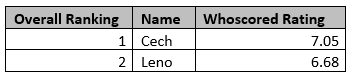
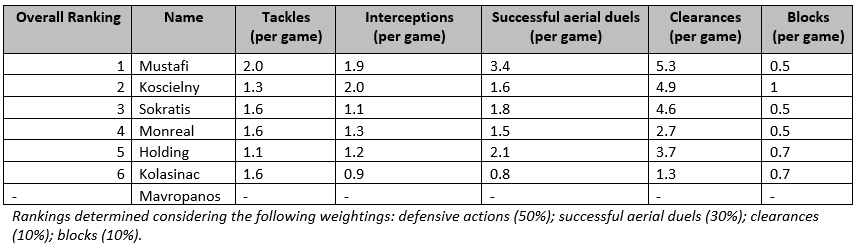
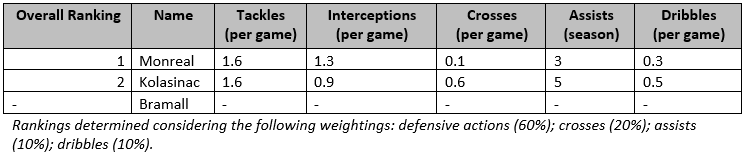
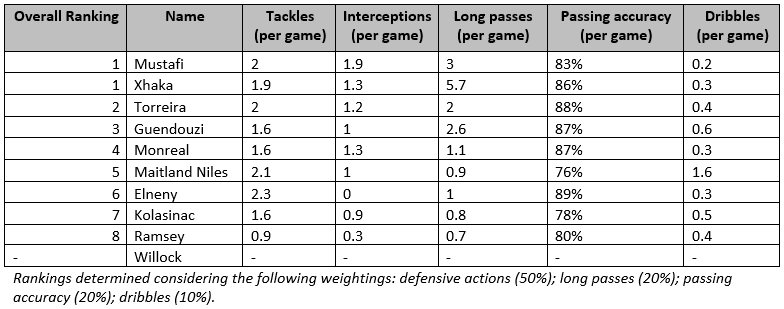
Following Round 29 of the Premier League, the player rankings are as follows:
Goalkeeper:
Right fullback:

Centre back:
Left fullback:
Centre midfield:
Attacking midfield:

Striker:
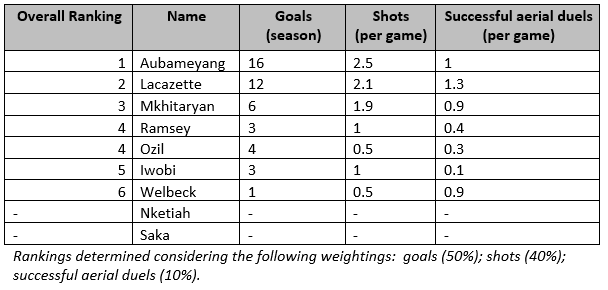
Formation and line-up
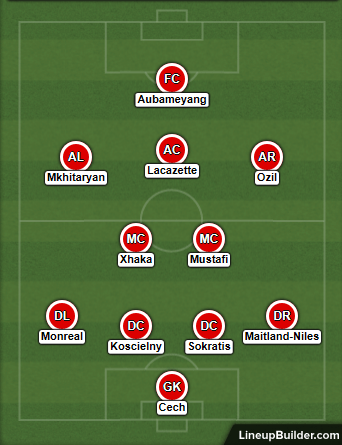
Based on the above analytical comparison, Arsenal’s aforementioned tactical basis, and with Bellerin, Holding, and Welbeck unavailable through injury, and Torreira suspended, the 11 players which comprise Arsenal’s most productive starting 11, for their round 30 clash versus Manchester United, would appear to be as follows:
Freddie08
Arsenal Analysis: Round 27 player analysis and Round 28 team selection
Following each round of the Premier League, each Arsenal player’s season-to-date performance is analysed and ranked against their internal competition.
In assessing the respective players on field production and their comparative internal rankings, each player is allocated into seven positional categories.
Those positional categories consist of:
- goalkeeper
- right fullback
- centre back
- left fullback
- centre midfield
- attacking midfield
- striker
Once categorised, each player’s output in defined key performance indicators (KPIs) for their respective positional category is then considered, using data sourced from Whoscored.com.
Different weightings are then assigned to the KPI data considered for each positional group based on the assumption that the cornerstones of Arsenal’s tactical approach is as follows:
- To stretch the game vertically, by creating generous spacing between their defensive and midfield block and attacking block, and taking risks with their forward passing, so as to allow for quick forward transitions and higher probability scoring opportunities.
- Arsenal’s goalkeeper’s primary aims are to stop shots and claim crosses.
- Arsenal’s centre backs’ primary aims are to recover the ball from their opponent (tackles and interceptions), win aerial duels, clear the ball from danger and block shots.
- Arsenal’s fullbacks’ primary aims are to recover the ball from their opponent (tackles and interceptions), cross the ball multiple times during a match (with the intent of providing assists), and contribute to the team’s offensive transitional play through multiple forward dribbles per match.
- Arsenal’s central midfielders’ primary aims are to recover the ball from their opponent (tackles and interceptions), and contribute to the team’s offensive transitional play through accurate passing, multiple long range passes, and multiple forward dribbles per match.
- Arsenal’s attacking midfielders’ primary aims are to provide assists, score goals, create goal scoring opportunities through multiple key passes, multiple through passes, and multiple forward dribbles per match.
- Arsenal’s strikers’ primary aims are to score goals, and record multiple shots and successful aerial duels per match.
N.B. the ‘defensive block’ is comprised of Arsenal’s goalkeeper, right and left full back, and centre backs; the ‘midfield block’ is comprised of Arsenal’s centre midfielders; and the ‘attacking block’ is comprised of Arsenal’s attacking midfielders and strikers.
The findings of the aforementioned analysis, provide an invaluable insight as to:
- how each player ranks against their internal competition within their positional category; and
- which 11 players make up Arsenal’s most productive team.
Internal player rankings
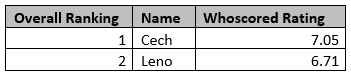
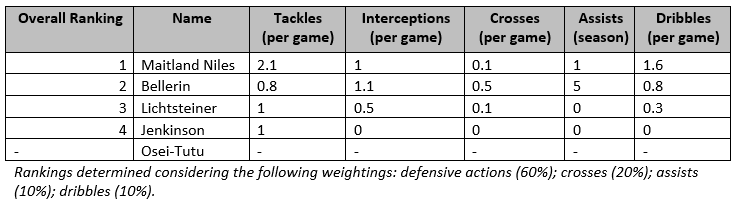
Following Round 27 of the Premier League, the player rankings are as follows:
Goalkeeper:
Right fullback:
Centre back:
Left fullback:

Centre midfield:
Attacking midfield:
Striker:
Formation and line-up
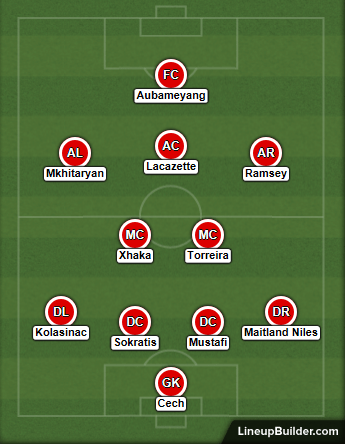
Based on the above analytical comparison, Arsenal’s aforementioned tactical basis, and with Lichtsteiner, Bellerin, Holding, Iwobi and Welbeck unavailable through injury, the 11 players which comprise Arsenal’s most productive starting 11, for their round 28 clash versus Bournemouth, would appear to be as follows:
Freddie08
 My Arsenal FC